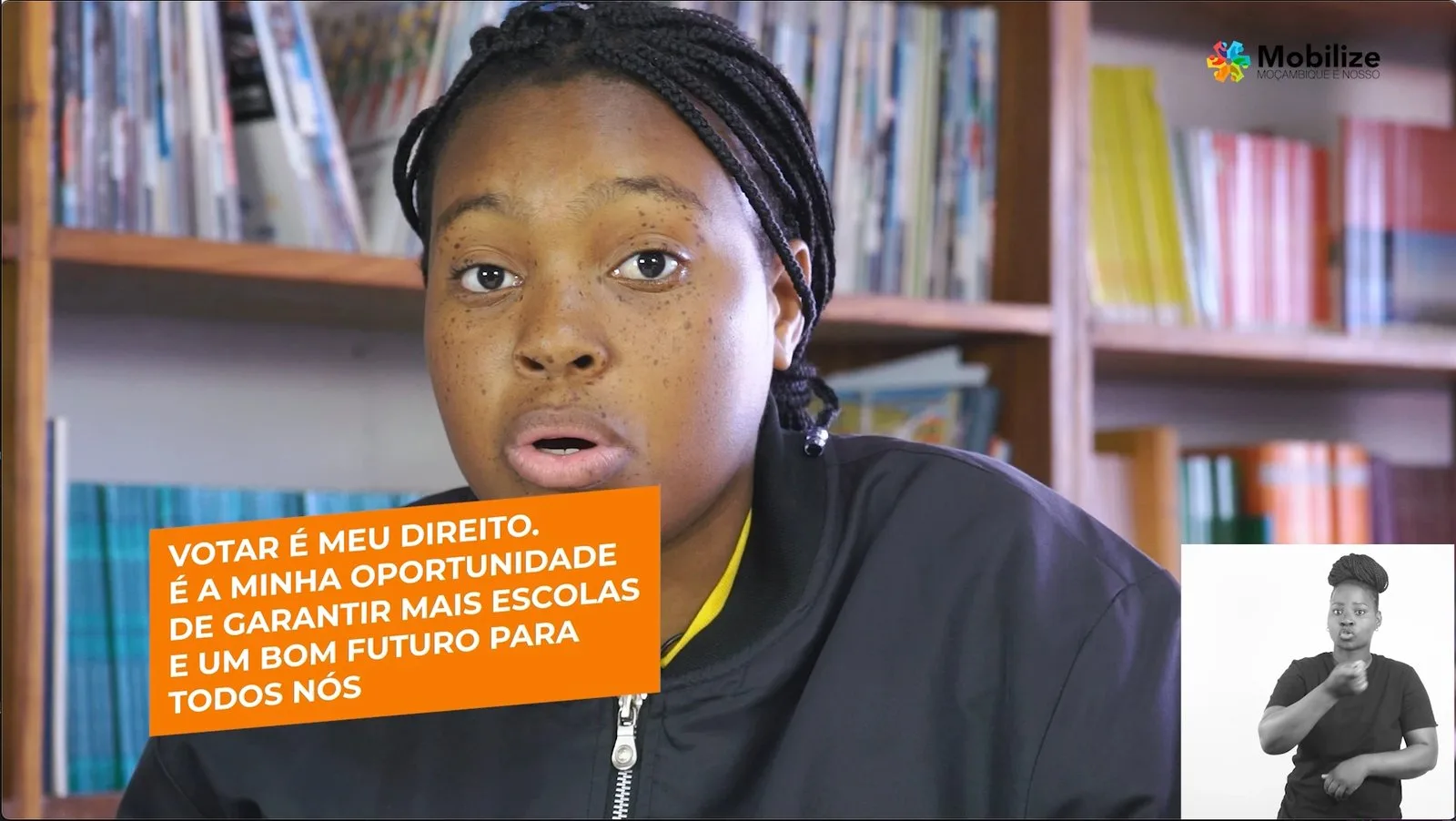
A social-impact video has a different goal from an institutional video: it doesn't exist to present the organization, it exists to change behaviours: get people to vote, to vaccinate, to report, to participate.
Define the change before the script
"Raising awareness" is not a measurable goal. "Increasing the participation of university youth in voter registration" is. The more specific the intended change, the more effective the piece, because the audience, the tone and the channels become obvious.
Know the real audience
In a campaign we produced about youth democratic participation, the key decision was not aesthetic: it was to film inside the universities, with real students, in Gen Z language, with rhythmic editing. The same theme for a rural audience would call for another approach, another rhythm, other voices.
Authenticity is strategy, not style
The target audience of social campaigns has a sharp radar for staging. Real people, real places, local language, including national languages when the audience calls for it. The aesthetics of the real (natural light, ambient sound) is not a budget limitation: it is what makes the message credible.
Plan distribution as part of production
A common mistake: spending the entire budget on production and having no distribution plan. From the start, define:
- Channels: community TV? Facebook? WhatsApp? Community screenings with a projector?
- Formats per channel: 16:9 for TV, 9:16 and 1:1 for social, short versions for WhatsApp.
- Subtitles and languages: subtitling is mandatory for social media; dubbing or versioning for national languages multiplies reach.
Measure and iterate
Impact campaigns rarely get it right the first time. Publish, measure (retention, shares, comments), learn and adjust the next cuts. That's why we always deliver adaptable material in multiple formats.
Want to use video to amplify the impact of your project? Talk to us: we reply within 24h.